
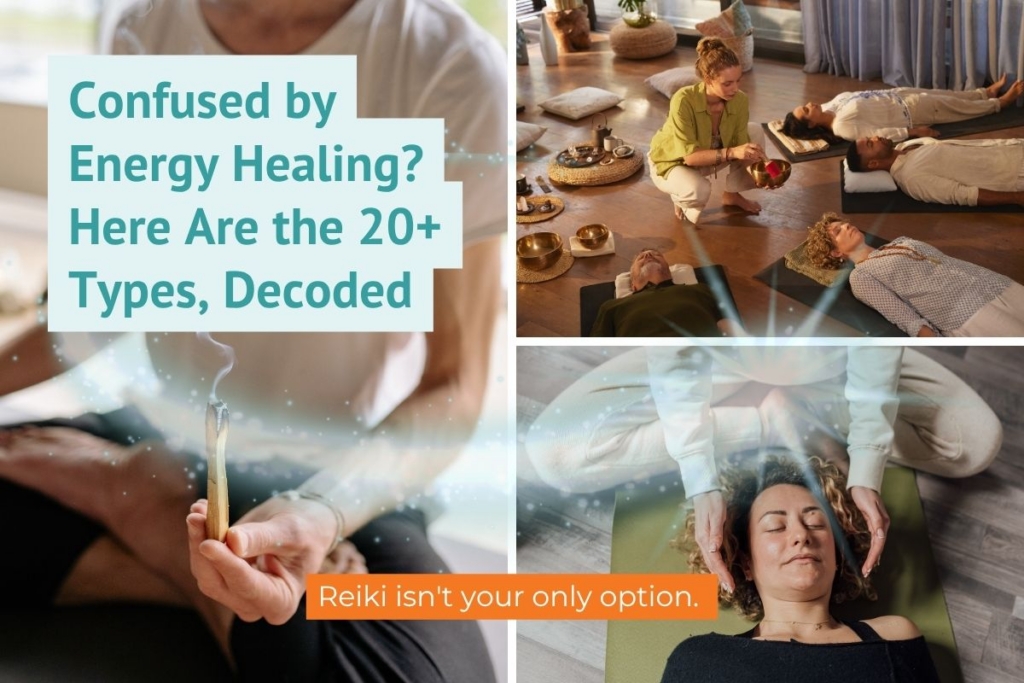
Quick Answer: What Are the Types of Energy Healing?
Energy healing is an umbrella term for more than 20 distinct practices, from hands-on approaches like Reiki and Healing Touch, to technique-based methods like the Emotion Code, to remote modalities like Pranic Healing and Distance Healing. Each one works with the idea of a subtle energy field, but they differ widely in technique, training, and what they’re best suited for.
What’s covered in this guide:
- What energy healing is and how it’s believed to work
- What the research actually says, the honest version
- Every major type of energy healing, grouped by category, with what each is best for
- How to match a modality to your specific concern
- What a session looks like, what it costs, and how to find a qualified practitioner
“Energy healing” gets used like it means one thing. It doesn’t. It’s a catch-all for more than 20 distinct practices, and most people land on a Reiki page when what they actually need might be Pranic Healing, the Emotion Code, or Angel Therapy instead.
Maybe you feel blocked, anxious, or physically off. Maybe you feel spiritually stuck and can’t quite name why. A friend or a search result told you to “try energy healing,” but no one explained the differences between the twenty-plus modalities that fall under that name.
By the end of this guide, you’ll understand the core concept behind energy healing, see every major modality broken down by what it’s best for, and know exactly where to find a vetted practitioner in the category that fits you. No guesswork required.
What Is Energy Healing?
Energy healing works with the idea of a subtle energy field, sometimes called chi, prana, or the biofield, rather than purely physical mechanisms. Practitioners aim to identify blockages in that field and restore its flow, using anything from light touch to intention alone.
The concept isn’t new. Traditional Chinese Medicine, Ayurveda, and indigenous healing traditions around the world have worked with life-force energy for centuries. Today’s energy healing and energy medicine modalities draw on those roots, even when they look modern and clinical on the surface.

How Does Energy Healing Work?
Most energy healing modalities share the same basic principle. Something disrupts the flow of energy in or around the body, and the practitioner’s job is to locate that disruption and help restore balance. The techniques for doing that vary enormously, from a Reiki practitioner’s hands hovering above your shoulders to a distance healer working from another state entirely.
Here’s the honest research picture.
It’s mixed, and it’s worth knowing before you book anything. Some reviews report measurable, positive effect sizes for pain and anxiety, particularly for biofield therapies like Reiki and Healing Touch. Other reviews conclude the evidence remains inconclusive, or insufficient to confirm effectiveness for any specific condition. Neither side is hiding the ball here. The National Center for Complementary and Integrative Health (NCCIH) has stated plainly that Reiki “hasn’t been clearly shown to be effective for any health-related purpose,” while also noting it “hasn’t been shown to have any harmful effects.”
Think of energy healing as complementary to conventional medical care, never a replacement for it. That’s the posture every reputable source in this space takes, and it’s the one this guide takes too.

Benefits of Energy Healing
People come to energy healing for a handful of recurring reasons: stress, anxiety, sleep trouble, chronic pain, grief, or a general feeling of being “stuck.” Some are looking for emotional release. Others just want to feel like themselves again.
Different modalities suit different goals. Someone dealing with tension might do best with a hands-on approach like Healing Touch, while someone working through limiting beliefs might get more out of the Emotion Code or Access Consciousness Bars. That’s exactly what the breakdown below is built to help you sort out.

The Types of Energy Healing: Full Breakdown
Here’s every major type of energy healing, grouped by category so it’s easier to navigate than a flat list.
Hands-On & Touch-Based
Healing Touch Therapy.
Developed in the 1980s by nurse Janet Mentgen, Healing Touch uses a standardized, ten-step sequence of gentle techniques to clear and balance the body’s energy field. It’s nursing-based and clinically structured, with practitioners earning the Certified Healing Touch Practitioner (HTCP) credential. Best for: people who want a hands-on approach with real training standards behind it, including anxiety, pain support, and recovery from surgery. [LINK: Healing Touch vs. Reiki vs. Therapeutic Touch-coming soon!]
Therapeutic Touch Therapy.
Despite the name, this is a non-touch practice. The practitioner holds their hands two to six inches from your body, scanning for and clearing congested areas of the energy field. It was developed in the 1970s by nursing professor Dolores Krieger, and it’s used in hospital and clinical settings more than any other modality on this list. Best for: relaxation and rebalancing in a clinical or healthcare setting. [LINK: Healing Touch vs. Reiki vs. Therapeutic Touch-coming soon!]
Reiki Healing.
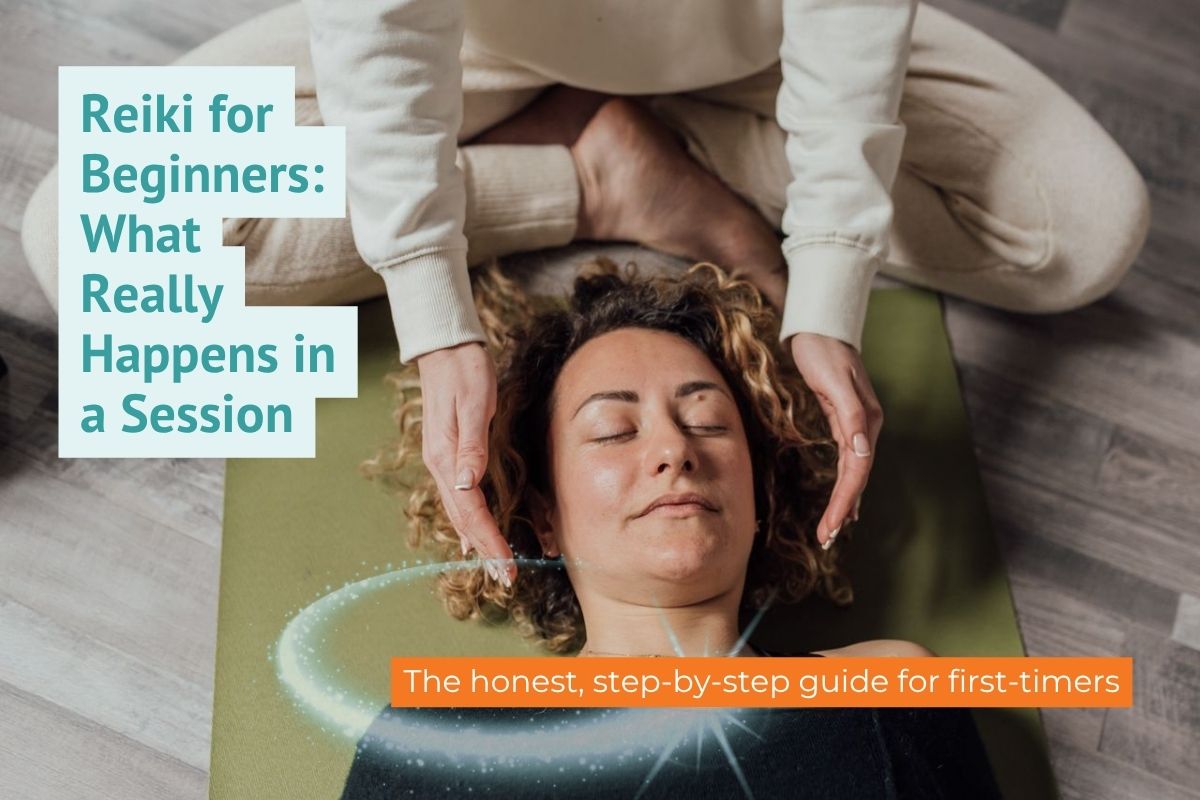
The most recognized entry point into energy healing. A Reiki practitioner places their hands lightly on or just above your body in a series of standard positions, aiming to direct life-force energy (“Ki”) to support your own healing response. Sessions can happen in person or remotely. Best for: stress and anxiety reduction, general relaxation, and anyone brand new to energy healing. [LINK: Reiki for Beginners: What Really Happens in a Session]
Technique-Based & Diagnostic
The Emotion Code.
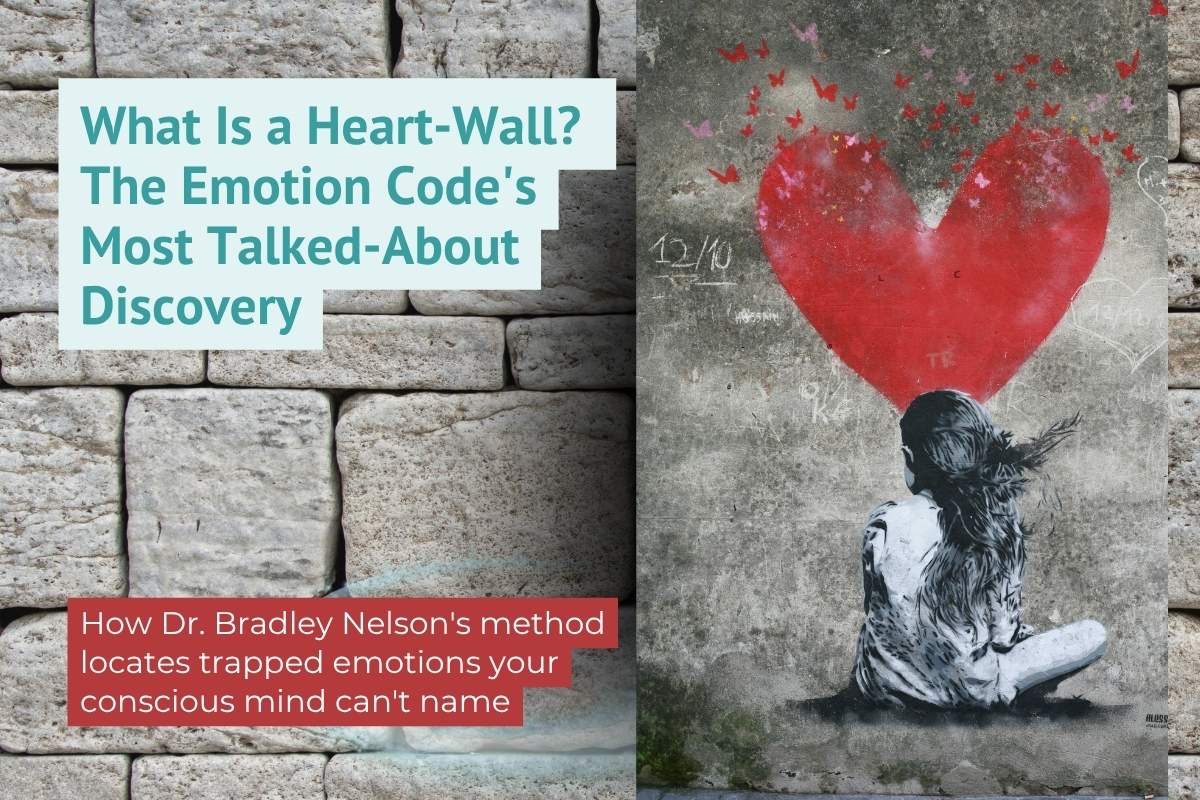
Created by Dr. Bradley Nelson, the Emotion Code uses muscle testing to identify “trapped emotions,” then runs a magnet over the corresponding meridian to help release them. Sessions work in person or remotely. Best for: emotional release and pinpointing specific emotional weight tied to physical discomfort. [BONUS lINKS: Releasing Emotional Blocks: Emotion Code, Body Code, Belief Code & Access Bars]
The Body Code.
An expansion of the Emotion Code into a broader diagnostic system, used to uncover a wider range of imbalances beyond trapped emotions alone. Best for: readers who want a more comprehensive session rather than a narrowly emotion-focused one. BONUS post: Unlock Healing: Inside The Body Code
The Belief Code.
Dr. Bradley Nelson’s Level 3 certification, built directly on the Emotion Code and Body Code. It uses a mind-mapping process to address limiting belief systems rather than individual emotions. Best for: readers working through stuck patterns or self-limiting beliefs, ideally after some familiarity with the Emotion Code. [BONUS post: What is The Belief Code by Dr. Bradley Nelson?]
EFT Tapping (Emotional Freedom Techniques).
A self-administered technique that combines fingertip tapping on acupressure points with spoken affirmations. It’s one of the few modalities on this list you can learn to do yourself. Best for: anxiety and PTSD-related symptoms, especially for readers who want a teachable, at-home practice alongside practitioner support for deeper trauma work.
BONUS post: Take the 21 Day EFT Tapping Challenge-Make a Significant Shift on Any Issue[LINK: EFT Tapping for Anxiety: How to Do It, and What the Research Actually Says-coming soon!]
PEMF Therapy (Pulsed Electromagnetic Field Therapy).
PEMF uses low-level electromagnetic pulses, delivered through a mat or device, aimed at supporting cellular activity and recovery. It’s more equipment-based than most modalities on this list and is often positioned around physical recovery and tension relief. Best for: readers looking for a technology-assisted, passive session format.
ENERGY INSIGHT: According to ConsciousnessCalibrations.com, Pulse PEMF therapy, also known as low field magnetic stimulation, it uses electromagnetic fields to try to help cellular dysfunction — ioaregenerative.com. Calibrates at 205, All-dimensions, all points of observation (ADAP), which is is positively oriented, constructive energy. (Note: As I am not a doctor, this result is not to be construed as medical advice.)
Biofield Tuning.
Uses tuning forks moved through the biofield to locate and release areas of tension, working on the premise that the body’s energy field holds a kind of vibrational memory. Best for: readers drawn to sound-based, non-touch sessions. [LINK: Biofield Therapy & Medical Intuition: What the Research Says-coming soon!]
Vibrational Healing.
An umbrella term for practices that use sound, frequency, or vibration, think singing bowls, tuning forks, or chanting, to shift energy in the body. It overlaps closely with sound healing and biofield tuning. Best for: readers who want a broad entry point into sound-based modalities before choosing a specific one.
BONUS post: Harmonizing Wellness: The Efficacy and Benefits of Sound Healing Therapies and Sound Healing Course Directory
Quantum Touch.
Combines light touch with specific breathing techniques, with practitioners aiming to raise their own energetic “vibration” and, by proximity, the client’s. Best for: readers who want a hands-on approach centered on breathwork. [LINK: Biofield Therapy & Medical Intuition: What the Research Says]
Polarity Therapy.
Developed by Dr. Randolph Stone, Polarity Therapy combines gentle touch, movement, nutrition, and self-awareness practices to restore balanced energy distribution across the body. It has one of the most structured credentialing paths in this list, up to Board Certified Polarity Practitioner (BCPP). Best for: readers who want a whole-lifestyle approach with real credentialing behind it. [LINK: Pranic Healing, Polarity Therapy & Jin Shin Jyutsu: The Structured Energy Systems]
Sound Healing / Sound Therapy.
Immersion in deep sound vibration using gongs, singing bowls, tuning forks, and chimes, typically while lying down and fully relaxed. Best for: stress relief, better sleep, and group or event-based experiences. Worth knowing: people with psychiatric conditions should check with a doctor before attending a sound bath, per Cleveland Clinic guidance. [LINK: Sound Baths & Sound Healing: What to Expect]
Intuitive & Channeled
Angel Therapy.
A channeled modality in which practitioners work through meditation, oracle cards, or intuitive readings to offer emotional and spiritual insight, often framed as guidance from angelic or higher-consciousness sources. Best for: readers seeking spiritual guidance in a gentle, reflective format. [Editorial note: needs a deeper research pass, no independent sourcing found yet.]
Integrated Energy Therapy (IET).
Developed by Stevan J. Thayer, IET uses gentle hand placements said to work with a subtle energy field to help release stored emotional patterns. Best for: readers who want a gentle, hands-on session paired with an emotional-release focus.
Medical Intuitive Readings.
A medical intuitive uses intuitive scanning of your body and energy field to offer insight into possible imbalances and personalized guidance. There’s no universal certification for this field, so vetting matters more here than almost anywhere else on this list. Sessions typically run $100 to $300 per hour. Best for: readers who want personalized insight alongside, never instead of, conventional medical care. [LINK: Discover the Power of Medical Intuition-coming soon!]
Traditional & Eastern Practices
Pranic Healing.
A no-touch system developed by Master Choa Kok Sui that works in three steps: scanning the aura for blockages, “sweeping” congested energy clear, then energizing with fresh prana. It’s highly structured and protocol-driven. Best for: readers who want a no-touch, remote-friendly session with a clear, repeatable format. [LINK: Pranic Healing, Polarity Therapy & Jin Shin Jyutsu: The Structured Energy Systems-coming soon!]
ThetaHealing®.
A meditative technique that aims to access the theta brainwave state to identify and shift limiting beliefs. Best for: readers interested in belief-pattern work through a guided meditative process.
Chi Nei Tsang.
A traditional Chinese abdominal massage technique based on the idea that emotional and energetic blockages get stored in the internal organs. Practitioners work directly on the abdomen to help release them. Best for: readers who want a hands-on, body-centered approach to releasing stuck energy.
Remote & Distance-Based
Distance Healing.
Energy healing delivered without the practitioner physically present, using intention, attunement, or a video call. A small peer-reviewed study found participants reported improvements in relaxation, well-being, and pain after virtual sessions, though the study was small and had no control group, so treat that as promising, not proven. Best for: readers outside a major city, or anyone who wants the convenience of a session from home. [LINK: Does Remote Energy Healing Work? What to Expect From a Virtual Session-coming soon!]
Reconnective Healing.
A frequency-based modality developed by Eric Pearl, typically delivered without touch and well suited to remote sessions. Best for: readers curious about a practitioner-guided, frequency-based approach. [LINK: Does Remote Energy Healing Work? What to Expect From a Virtual Session-coming soon!]
Access Consciousness Bars.
A practitioner lightly touches 32 points on your head, said to hold the electromagnetic components of thoughts and emotions, to help release stuck patterns. Many people fall asleep during a session. Worth knowing: it’s often described by critics as lacking scientific basis, so this one is best framed as relaxation and personal development, not treatment. Best for: deep relaxation and working with self-limiting beliefs. [LINK: What is Access Consciousness?]

Consciousness Calibration: Types of Energy Healing
For readers familiar with consciousness calibration work, here’s how these modalities and related practices measure on the scale, alongside a “Health / Healthy” reference point for context.
Reference Point
| Item | Calibration | Type |
| Health / Healthy | 360 | MOC |
| Health / Healthy | 250 (range 200-330) | ADAP |
Modalities, Highest to Lowest
| Item | Calibration | Type |
| BodyTalk | 390 | MOC |
| Attractor Field Techniques (theory) | 380 | MOC |
| EFT (Emotional Freedom Techniques) | 370 (range 175-440) | ADAP |
| Energy Medicine | 360 | MOC |
| Neuro Emotional Technique (NET) | 360 | MOC |
| The Belief Code | 360 | ADAP |
| Recall Healing | 350 | ADAP |
| The Body Code | 350 | ADAP |
| Mind Body Spirit Release™ | 345 | MOC |
| Reiki | 340 | MOC |
| Reiki | 290 (range 180-360) | ADAP |
| Sound Healing Therapies | 280 (range 170-350) | ADAP |
| Biomagnetic Pair Therapy | 270 | MOC |
| Coherence Healing | 270 | ADAP |
| Access Bars® | 245 | MOC |
| The Emotion Code | 240 (range 175-340) | ADAP |
| Havening | 240 | ADAP |
| Earthing | 230 | ADAP |
| Thought Field Therapy | 220 | ADAP |
| Pulse PEMF Therapy | 205 | ADAP |
| Craniosacral Therapy | 205 | ADAP |
| Attractor Field Techniques (implementation) | 200 | MOC |
| Magnified Healing | 195 | ADAP |
| Holosync (Centerpointe) | 185 | MOC (TvF) |
| ThetaHealing® | 180 | MOC |
Calibrations reference Dr. David R. Hawkins’ Map of Consciousness®, expanded by ConsciousnessCalibrations.com into ADAP (All-Dimensions, All Points of observation) and Full Field calibrations, on a scale of 0 to 1,000. (Download Brian’s Map of Spiritual progress here.)These numbers are logarithmic (base 10), not linear, so a calibration of 250 reflects a power of 10^250, not “250 units.” A higher number doesn’t mean “better,” it reflects a different order of magnitude of consciousness and truth. Calibrations below 200 (shaded rows above) are negatively oriented, destructive, and downward-pulling. Liz Gracia is not a physician, and this table is not medical advice or a treatment recommendation, it’s offered as context to help you make your own informed decisions.

How to Choose the Right Type of Energy Healing for You
Start with the concern you’re actually trying to address, then work backward to the modality.
| If you’re dealing with… | Consider starting with… |
| Everyday stress or tension | Reiki, Sound Healing, Healing Touch, or Jin Shin Jyutsu |
| Anxiety or emotional overwhelm | EFT Tapping, Reiki, or Sound Healing |
| Chronic pain or physical tension | Polarity Therapy, Healing Touch, Therapeutic Touch, or PEMF Therapy |
| Grief or emotional trauma | Medical Intuitive readings, Angel Therapy, or EFT Tapping, alongside a licensed therapist |
| Feeling stuck or blocked | The Emotion Code, Body Code, Belief Code, or Access Consciousness Bars |
| Spiritual guidance or reconnection | Angel Therapy, Integrated Energy Therapy, Pranic Healing, or ThetaHealing® |
And it’s genuinely fine to try more than one. Plenty of people combine a hands-on modality like Reiki with a technique-based one like the Emotion Code, since they work on different layers of the same overall goal.

What to Expect in an Energy Healing Session
Most sessions run 30 to 90 minutes. You typically stay fully clothed, lying down or seated, while the practitioner works with hands-on touch, hands hovering near your body, or no physical contact at all, depending on the modality.
In-person sessions happen at a practitioner’s office, a wellness studio, or sometimes your own home. Remote sessions happen over video or by phone, with the practitioner describing what they’re doing or working from intention alone. Distance modalities like Pranic Healing and the Emotion Code are explicitly designed to work just as well remotely as in person.
Some modalities are single sessions. Others, like spiritual healing for long-term conditions, are typically done as a short series, often six to eight sessions, to build on each other.

How Much Does Energy Healing Cost?
In general, expect single sessions to run anywhere from $50 to $200, with specialized or longer sessions, and highly credentialed practitioners like Board Certified Polarity Practitioners, priced higher. Package pricing for multi-session series is common with modalities like spiritual healing and shamanic-adjacent work.

How to Find a Qualified Energy Healer Near You
Some modalities, like Healing Touch (HTCP) and Polarity Therapy (BCPP), have real certification standards behind them. Others, including Reiki and medical intuition, have no universal credentialing body at all. That’s not automatically a red flag, but it does mean you need to vet a practitioner yourself: ask about their training, read reviews, and confirm they list a clear specialty.
For a full step-by-step vetting process, see our guide: [LINK: The Ultimate Guide to Finding the Best Energy Healers Near You].
Or skip straight to browsing verified practitioners below.


Frequently Asked Questions
Is energy healing real?
It depends what you mean by “real.” The energy field itself hasn’t been scientifically confirmed to exist, and major health bodies like NCCIH say Reiki “hasn’t been clearly shown to be effective for any health-related purpose.” At the same time, some peer-reviewed reviews report meaningful effect sizes for pain and anxiety reduction from Reiki specifically. Both things are true at once: the mechanism is unproven, and some people report real benefit. Approach it as complementary support, not a cure.
How do I know which type is right for me?
Start with the concern you’re trying to address, stress, pain, grief, feeling blocked, and use the quick-reference table above to find a starting point. From there, read a couple of modality descriptions that stood out to you and see which one feels like the right fit. It’s also fine to try more than one.
Can energy healing help with anxiety, chronic pain, or grief?
Some people report real relief in all three areas, and modalities like Reiki and EFT Tapping have the most research behind them for anxiety and pain specifically. Grief and trauma are the most sensitive concern on this list. Any modality you try for grief should be used alongside, never instead of, a licensed therapist.
Is it safe to combine energy healing with conventional medicine?
Generally yes, energy healing is designed to be complementary, not a replacement for medical care. Keep your doctor or therapist informed about any energy healing you’re doing, especially if you have a diagnosed physical or mental health condition, and never stop a prescribed treatment without medical advice.
Can I combine more than one type of energy healing?
Yes. Many people pair a hands-on modality like Reiki with a technique-based one like the Emotion Code, since they tend to work on different layers of the same underlying goal. There’s no single “correct” combination, just what actually helps you.
Not Sure Which Type Fits You?
You don’t have to figure this out alone. Browse every energy healer in our directory, filter by modality, concern, or remote availability, and find the practitioner who’s right for where you are right now.
Sources & Citations
This post draws on peer-reviewed research and recognized health organizations. Note: automated verification of the PMC links below was blocked by NCBI’s bot protection at draft time, confirm each link resolves before publishing.
1. Rubik B. et al. — Biofield Science and Healing: History, Terminology, and Concepts
https://pmc.ncbi.nlm.nih.gov/articles/PMC4654785/
NIH/NCCIH-aligned framework classifying biofield therapies and defining the terminology used throughout this piece.
Supports: the “What Is Energy Healing” definition and classification of biofield therapies.
2. Lee M.S., Pittler M.H., Ernst E. (2008) — Effects of Reiki in clinical practice: a systematic review of randomised clinical trials
https://pubmed.ncbi.nlm.nih.gov/18410352/
International Journal of Clinical Practice review concluding evidence is insufficient to confirm Reiki’s effectiveness for any specific condition.
Supports: the honest-evidence framing in “How Does Energy Healing Work” and the FAQ.
3. Thrane S., Cohen S.M. (2014) — Effect of Reiki Therapy on Pain and Anxiety in Adults
https://pmc.ncbi.nlm.nih.gov/articles/PMC4147026/
Pain Management Nursing literature review finding meaningful effect sizes for pain and anxiety reduction across reviewed Reiki trials.
Supports: the balanced “some reviews show measurable, positive effect sizes” claim.
4. Therapeutic effects of Reiki on interventions for anxiety: a meta-analysis (2024)
https://pmc.ncbi.nlm.nih.gov/articles/PMC11170819/
Meta-analysis reporting a statistically significant reduction in anxiety across 13 controlled studies.
Supports: the anxiety-relief claim for Reiki in the FAQ.
5. Qi — traditional Chinese medicine concept overview
https://en.wikipedia.org/wiki/Qi
Overview of qi’s role in meridian theory, including the 1998 NIH Consensus Statement noting qi is difficult to reconcile with contemporary biomedical science.
Supports: the historical/cultural roots note in “What Is Energy Healing.”
6. Prana: Meaning in Ayurveda
https://guide-ayurveda.com/glossary/prana/
Overview of prana as the Ayurvedic/yogic life-force concept underlying many Eastern-rooted energy healing modalities.
Supports: the historical/cultural roots note in “What Is Energy Healing.”
Leave A Comment