
The Short Answer
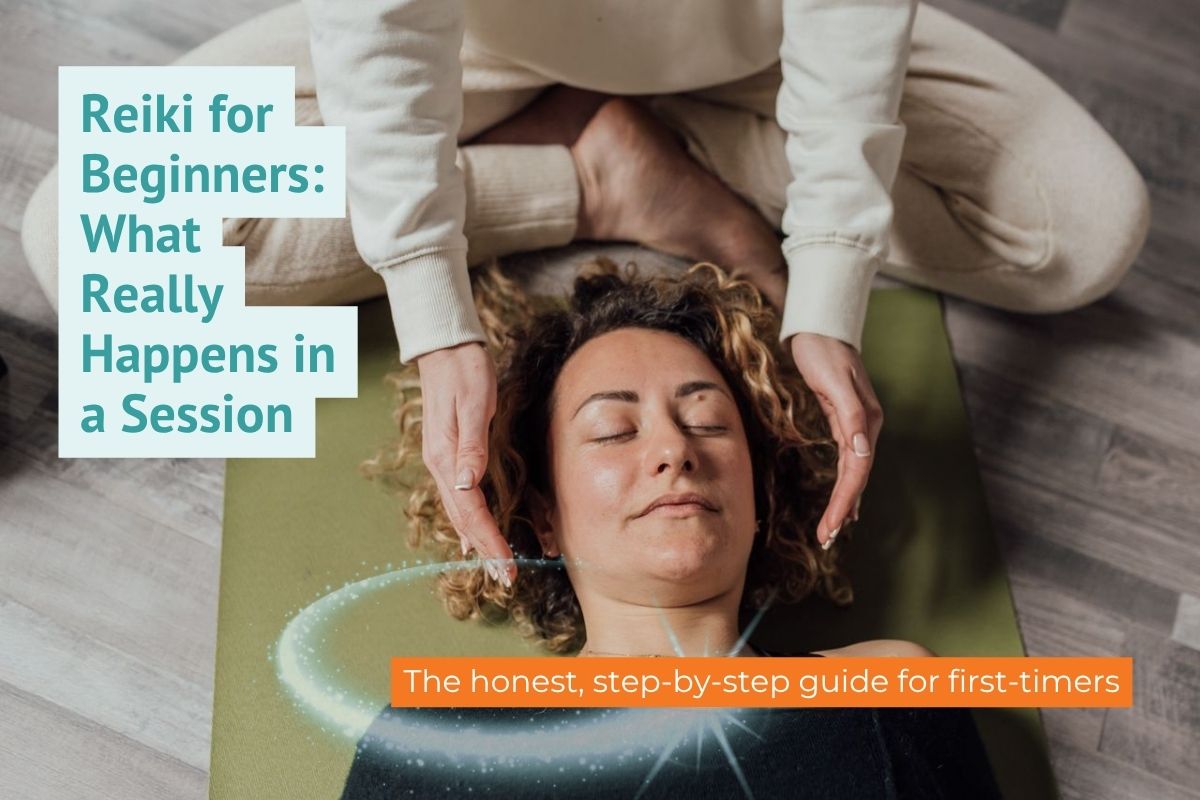
Reiki for beginners is simpler than it sounds. You stay fully clothed, you lie down (or sit), and a practitioner rests their hands lightly on or just above your body in a series of positions for about 45 to 60 minutes. Most people feel warmth, tingling, or deep relaxation. Some feel nothing dramatic at all, and that’s normal too.
What’s covered:
- What Reiki actually is, in plain language
- A real step-by-step walkthrough of a session
- What you might feel (the honest range)
- Touch, clothing, and boundaries
- In-person vs. remote sessions
- What the research says, and doesn’t say
- Who Reiki tends to suit, and who should check with a doctor first
- How to choose a practitioner you can trust
Booking your first Reiki session usually comes with more questions than answers. Will you be touched? Do you have to believe in it? What if you feel nothing at all? Reiki for beginners doesn’t have to be a mystery. It’s a gentle, well-documented practice with a fairly consistent format, and once you know what to expect, most of the anxiety about “doing it wrong” disappears.
This guide walks through exactly what happens in a Reiki session, from the moment you arrive to what your body might do afterward. It also separates what practitioners believe from what research has actually confirmed, because you deserve both sides before you book.

What Reiki Actually Is
Reiki is a complementary health practice where a practitioner places their hands lightly on or just above your body to support your own natural healing response.
The word comes from two Japanese terms: “Rei,” meaning higher power or universal wisdom, and “Ki,” meaning life-force energy. Together, Reiki describes a life-force energy guided by a higher power and channeled through the practitioner’s hands.
It was developed in the early twentieth century by Mikao Usui and has since become one of the most widely recognized energy healing practices in the U.S., alongside acupuncture and Therapeutic Touch.
One thing worth knowing upfront: Reiki is complementary, not a replacement for medical or mental health care. Every credible source on the topic, including the National Center for Complementary and Integrative Health (NCCIH) and Cleveland Clinic, is clear that Reiki should be used alongside your regular healthcare, never instead of it.
What Happens in a Reiki Session, Step by Step
A typical Reiki session follows the same basic structure whether you book in-person or remotely, and it usually runs 45 to 60 minutes start to finish.
Arrival and a short conversation.
You’ll settle into a quiet room and talk with your practitioner for a few minutes about what brought you in: stress, sleep, grief, or simply curiosity. There’s no wrong answer, and you don’t need a specific goal walking in.
Getting comfortable.
You’ll lie down, or sit if that’s easier, fully clothed on a treatment table. Loose, comfortable clothing is all you need. Nothing comes off, nothing gets applied.
The session itself.
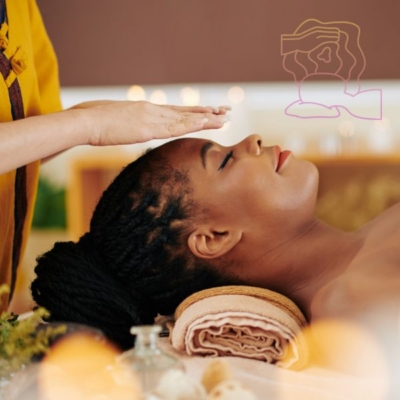
Your practitioner moves through a series of hand positions along your head, shoulders, torso, and legs, either resting their hands lightly on your body or hovering just above it. You can ask for a no-touch session at any point, and a good practitioner will honor that without hesitation.
Closing and grounding.
The session ends gently, with a few minutes to reorient before you sit up. Many people feel noticeably slower and calmer at this point. That’s expected, not a sign anything went wrong.
A brief debrief.
Your practitioner may ask what you noticed and offer simple aftercare tips: hydrate, rest if you can, and keep the rest of your day a little lighter than usual.

What You Might Feel During a Session
What Reiki feels like varies enormously from person to person, and there is no single correct experience.
Common sensations include warmth or coolness where hands are placed, gentle tingling or pulsing, a pleasant heaviness, or a floating, lighter feeling. Some people notice emotional release: tears or unexpected calm arriving without an obvious cause. None of that means anything went wrong. It usually just means the body finally had permission to stop holding itself up.
Others feel very little physically and simply drift into a deep, unfamiliar sense of rest. That’s just as normal, and it doesn’t mean the session “didn’t work.” Research has documented measurable shifts during Reiki sessions, including reduced heart rate, lower blood pressure, and slower breathing, changes that happen whether or not you consciously feel anything.
If you leave your first session wondering whether you did it “right,” the honest answer is that resting is the only job you have.

Will You Be Touched? Clothing and Boundaries
You stay fully clothed for the entire session, and touch, when it’s used, is light and respectful rather than pressure-based.
Wear something loose and comfortable, similar to what you’d wear to a gentle yoga class. Some practitioners work with hands resting lightly on the body. Others prefer to hover just above it. Many offer both, and you’re always allowed to ask for a no-touch session before you begin.
If anything about the setup feels off, a good practitioner will adjust without making it awkward. Your comfort is part of the process, not an afterthought.

In-Person or Remote: Both Are Considered Real Reiki
Reiki doesn’t require the practitioner to be in the same room, and distance sessions follow the same core structure as in-person ones.
Practitioners describe distance Reiki as working through intention and attunement rather than physical proximity. If travel, mobility, or location makes in-person sessions difficult, a remote session is a legitimate way to try it, and it opens up practitioners well outside your zip code.
Curious whether virtual energy work actually holds up? [LINK: Does Remote Energy Healing Work? What to Expect From a Virtual Session] breaks down what a remote session looks like and what the research says about it.

What the Research Actually Says (and Doesn’t)
The honest answer is that Reiki hasn’t been proven to work through a measurable energy field, but it also hasn’t been shown to cause harm.
The NCCIH states plainly that Reiki “hasn’t been clearly shown to be effective for any health-related purpose” and that most research on it “has not been of high quality.” NCCIH also notes there is no scientific evidence supporting the existence of the energy field practitioners describe, though the practice “hasn’t been shown to have any harmful effects.” 1
Cleveland Clinic frames it similarly: energy healing “isn’t scientifically proven to be effective,” but clinical trials have shown that “acupuncture and Reiki may offer some health benefits,” particularly around stress and quality of life. 2 Mind, a UK mental health charity, notes that while most Reiki studies have been small or lower quality, some people do report improved mood afterward. 3
What this means in practice: treat Reiki as a complementary relaxation practice, not a treatment for a diagnosed condition. Keep your healthcare provider in the loop about anything you’re trying alongside your regular care.
A Consciousness Insight 💡 Reiki Calibrates Well Above the Line
According to consciousness calibrations, based on Dr. David R. Hawkins’ decades of consciousness research using applied kinesiology, Reiki calibrates at 290, in a range of 180 to 360. That places it solidly above the 200 mark that separates constructive, higher-consciousness energy from depleting, ego-based energy.
This is may be part of why a session tends to feel different from simply trying to relax on your own. You’re not forcing calm into existence. You’re stepping into something that already calibrates as constructive, and letting it do the work.

Who Reiki Tends to Suit (and Who Should Check With a Doctor First)
Most people try Reiki for stress and anxiety relief, though some also seek it out for mood, sleep, or a general sense of feeling “off.”
Commonly reported reasons people book a session include everyday stress and overwhelm, a racing mind at bedtime, emotional heaviness after a hard season, and simply wanting a structured hour to slow down. These are patterns in what people report seeking Reiki for, not clinical claims or guarantees.
Reiki is generally considered low-risk since it’s non-invasive. Still, it should never replace treatment for a diagnosed physical or mental health condition. If you’re managing something serious, loop your provider in and treat Reiki as a support, not a substitute.

How to Choose a Reiki Practitioner You Can Trust
Reiki has no universal certification standard, which makes vetting your practitioner more important than it might be for a licensed field.
Training is typically taught in Levels I, II, and Master, but there’s no government-issued license or single accrediting body behind those titles the way there is for, say, acupuncture. 4 That’s not a red flag on its own, but it does mean you’re the one doing the vetting.
Look for a practitioner who explains the session flow before you start, respects a no-touch request without pushback, and doesn’t promise a specific outcome. Our Ultimate Guide to Finding the Best Energy Healers Near You walks through exactly what to ask before you book.
Ready to find someone? [LINK: Directory – Reiki Practitioners, filter by in-person or remote] lets you search by location or pull up remote-only listings if you’d rather start from home.

Frequently Asked Questions
How long does a Reiki session last?
Most sessions run 45 to 60 minutes, including a short intake conversation before and a few minutes to reorient afterward. Some practitioners offer shorter 20 to 30 minute sessions for a quick reset.
Do I need to believe in Reiki for it to work?
No. Curiosity and openness are enough. Many people who try Reiki skeptically still report leaving sessions feeling calmer, largely because the format itself, a quiet room, structured time, and permission to simply rest, supports relaxation regardless of belief.
What if I don’t feel anything during my session?
That’s common, especially the first time. Sensitivity to subtle physical sensation varies a lot between people. Feeling nothing dramatic doesn’t mean the session failed. Some people notice shifts in sleep or mood in the day or two afterward instead.
Is Reiki safe?
Reiki is non-invasive and generally considered low-risk. NCCIH notes it hasn’t been shown to cause harm. That said, it’s a complementary practice, not a medical treatment, so it should be used alongside, not instead of, care from a licensed provider.
How many sessions do I need as a beginner?
There’s no fixed number. Many beginners start with a single session to see how they respond, then decide whether a short series, weekly or biweekly, feels worthwhile for ongoing stress or sleep support.
Find a Reiki Practitioner Who Fits You
If a single hour of structured rest sounds worth trying, the next step is simple: find a practitioner whose approach feels right for you.
Whether you’d rather sit across from someone in person or try a distance session from your couch, [LINK: Directory – Reiki Practitioners] can help you find someone in our directory. And if you want the fuller picture on vetting a practitioner in any energy healing modality, our Ultimate Guide to Finding the Best Energy Healers Near You is a good next stop.
Sources & Citations
This post draws on the following primary sources. Numbered references above correspond to the citations below.
1. National Center for Complementary and Integrative Health (NCCIH): Reiki
https://www.nccih.nih.gov/health/reiki
The U.S. government’s consumer fact sheet on Reiki, covering current evidence and safety.
Supports: the evidence and safety framing in “What the Research Actually Says.”
2. Cleveland Clinic: Energy Healing (Energy Medicine)
https://my.clevelandclinic.org/health/treatments/energy-healing
Cleveland Clinic’s medically reviewed overview of energy healing modalities, including Reiki, covering definitions, reported benefits, and safety.
Supports: the definition of Reiki and the “may offer some health benefits” framing.
3. Mind (UK mental health charity): Complementary and Alternative Therapies
https://www.mind.org.uk/information-support/drugs-and-treatments/complementary-and-alternative-therapies/types-of-complementary-and-alternative-therapies/
Mind’s overview of complementary therapies used for mental health support, including Reiki.
Supports: the note on study quality and self-reported mood benefit.
4. Healing Touch Program: Healing Touch and Reiki, How Do They Compare?
https://www.healingtouchprogram.com/blog/healing-touch-and-reiki-how-do-they-compare
A practitioner education organization’s comparison of Healing Touch and Reiki, including certification and training standards for each.
Supports: the “no universal certification standard for Reiki” claim in the practitioner-vetting section.
5. International Association of Reiki Professionals: What Is Reiki?
https://iarp.org/what-is-reiki/
A Reiki professional association’s overview of the practice and its core hand-position technique.
Supports: the session-structure description in “What Happens in a Reiki Session, Step by Step.”

Leave A Comment