

Quick Answer: What Does a Confidence Coach Do?
A confidence coach helps you close the gap between what you’re capable of and what self-doubt lets you do. Sessions focus on reframing limiting beliefs, practicing assertiveness, and taking small, deliberate risks that rebuild your track record of trust in yourself.
What’s covered:
- What a confidence coach actually does, session by session
- How confidence coaching differs from life coaching and therapy
- Signs you might be ready to work with one
- What sessions look like, and what they typically cost
- How to vet a coach and find the right fit
I’ve always considered myself a confident person. But for years I kept running into the same wall: I could set a clear intention, consciously want something for my life, and watch it just not show up. That gap taught me something. Confidence isn’t only how you carry yourself in a room. It’s whether the parts of you still running the show underneath, the buried, suppressed emotions from your past, actually believe what you say you believe.
That’s the real work a good confidence coach does, and it’s bigger than most people assume when they hear the word “confidence.” A good coach doesn’t just help you fake it until you make it.(NOT a good strategy BTW according to ConsciousnessCalibrations.com) They help you get self-aware enough to see what’s actually blocking you: the fear, the doubt, the old proof you’ve been carrying around that says you can’t. Then they help you step into courage on exactly that thing. Courage is a much higher state to operate from than doubt. When you step into it, everything downstream of it changes.
This guide breaks down what a confidence coach actually does, how the role differs from a life coach or therapist, the signs you might be ready for one, and how to find the right fit in the MBSN directory.

What Is a Confidence Coach?
A confidence coach is a specialized type of life coach who focuses specifically on self-doubt, self-esteem, and self-sabotage.
Where a general life coach might work across career, relationships, and life direction all at once, a confidence coach narrows in on one layer: how you see your own worth and capability, and how that shows up in what you’re actually willing to do.
Think of it as a personal trainer for your self-belief. A trainer doesn’t rebuild your whole life. They build strength in one area through repeated, structured practice. A confidence coach does the same thing for the part of you that hesitates, over-apologizes, and holds back.
You’ll sometimes see the role called a self-esteem coach or self-worth coach. The terms overlap heavily and mostly reflect a coach’s own branding rather than a real difference in approach.
The real shift happens when you get honest about what’s still running underneath the surface confidence, and choose courage over the old story anyway.
A Consciousness Insight 💡 What Consciousness Research Reveals About Life Coaching
According to consciousness calibrations, the occupation of life coach calibrates at 340 on the Map of Consciousness, in a range of 180 to 430. That places it solidly in the field of Acceptance, the level associated with empowerment, possibility, and genuine capacity for change.
Hiring a life coach calibrates at 245, in a range of 170 to 390. That range reflects the wide variation in why people seek coaching and the energy they bring to it. At its best, the act of hiring a coach is itself a move toward growth. At its lowest expression, it can be driven by fear, obligation, or external pressure rather than genuine inner readiness.
The gap between 245 and 340 is worth noting. The coach holds a significantly higher energetic field than the average hiring decision. That differential is part of what makes the relationship work: you are stepping into a field that can genuinely lift your own.
Calibrations sourced from ConsciousnessCalibrations.com, based on the Map of Consciousness developed by Dr. David R. Hawkins. Posted January 22, 2026.

Confidence Coach vs. Life Coach vs. Therapist
Confidence coaching sits between general life coaching and therapy, and knowing where the lines fall helps you choose the right support.
| Focus | Timeframe | Credentials Required | Typical Format |
|---|---|---|---|
| Confidence Coach: self-belief, self-worth, visibility | Present and future-focused | None legally required; ICF credentials recommended | Weekly or biweekly sessions, 3 to 6 month packages |
| Life Coach: goals, career, relationships, life direction broadly | Present and future-focused | None legally required; ICF credentials recommended | Weekly or biweekly sessions, ongoing or package-based |
| Therapist: diagnosing and treating mental health conditions | Often past and present-focused | State license required (LMFT, LCSW, PhD, etc.) | Weekly sessions, clinical setting |
A confidence coach’s work is narrower than a life coach’s and more action-oriented than a therapist’s. They won’t diagnose you or treat clinical anxiety or depression. If you’re dealing with a mental health condition, a licensed therapist is the right first call. Confidence coaching can complement that work once you’re stable.

Signs You Might Be Ready for a Confidence Coach
A few patterns tend to show up consistently in people who are ready to start confidence coaching.
- You second-guess decisions constantly, even ones you’ve already made.
- You stay in your comfort zone out of fear of failure or judgment, even when you want more.
- Imposter syndrome shows up hard after a promotion, career change, or new venture.
- You people-please and struggle to set boundaries, and it’s starting to cost you.
- You feel stuck despite genuinely trying: reading the books, doing the self-help work, and still not moving.
Imposter syndrome is more common than most people realize, though how common depends heavily on how it’s measured. A systematic review of 62 studies covering more than 14,000 participants found prevalence estimates ranging from 9% to 82%, depending on the screening tool used.[1] Korn Ferry’s 2024 research put a more specific number on it at the very top of the career ladder: 71% of U.S. CEOs report experiencing symptoms of imposter syndrome in their role.[2] If it’s showing up for people running major companies, it’s not a sign something is uniquely wrong with you.
What Does Confidence Coaching Actually Look Like?
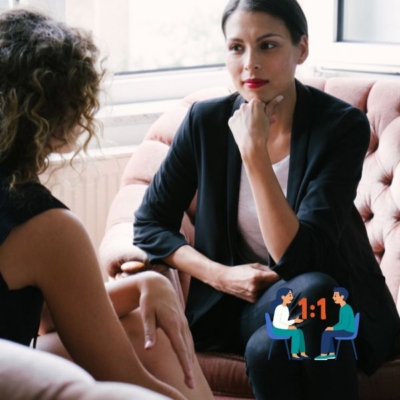
Confidence coaching sessions combine cognitive work with real-world practice, not just talking about feeling more confident. You also can’t resolve a lack of confidence from the same level of consciousness that created it, which is why the most effective sessions go beneath the thinking layer, not just through it.
Cognitive reframing.
Your coach helps you catch and challenge the negative self-talk and limiting beliefs running in the background, then replace them with something more accurate.
Goal-setting and action plans.
Confidence grows from doing, not just thinking differently. Sessions build structured plans with concrete next steps.
Visualization and guided imagery.
Mentally rehearsing a hard conversation or a big ask primes you to actually follow through when it counts.
Assertiveness and boundary practice.
Some coaches use role-play so you can practice saying no, asking for what you want, or speaking up in a meeting before you do it live.
Small, deliberate risks.
Confidence isn’t built by thinking positive thoughts. It’s built by taking small risks on purpose and collecting evidence that you can handle what happens next.
Accountability between sessions.
Most coaches check in on what you committed to and what got in the way, which keeps the work moving between appointments.
Energy-based modalities.
Some confidence coaches work beneath the cognitive layer entirely, addressing the emotional blocks stored in the body. Techniques like the Emotion Code, Belief Code, and Body Code, along with EFT tapping, are increasingly used to clear old emotional blocks that keep self-doubt in place. Sometimes the fastest way through isn’t more thinking. It’s releasing what’s already stored.
Whatever the method, willingness is the real starting point: the readiness to get self-aware, look at what’s uncomfortable, and be honest about what’s actually been running the show.

How Much Does Confidence Coaching Cost?
Confidence coaching in the U.S. typically runs $75 to $300 per session, or $500 to $2,500 and up for a 3 to 6 month package.
Niche confidence and mindset-focused coaches often charge $100 to $220 an hour, with packages landing between $800 and $2,500. High-ticket programs with a well-known coach can run into the thousands.
The honest way to think about the investment: weigh it against the cost of staying stuck. A missed promotion, a business idea you never pitch, or another year of playing small has its own price tag, even when it’s less visible than an invoice.
A note on energy 💡 and the consciousness of this statement on self-esteem.
Per ConsciousnessCalibrations.com, the statement “self-esteem is automatically monetized” calibrates at 480, solidly in the range of reason and clarity. That’s a high number, and in this framework, a high number carries real weight, whether or not you’re inclined to believe it going in.
I can tell you it’s tracked with my own experience. Once I stopped questioning the confidence I already have and started fully owning it, something shifted that’s hard to fully explain: an energy people can feel. They want to engage with me. They want to work with me. Consciousness calibrations didn’t create that. It just gave me a way to validate what I was already sensing.
If the cost of coaching feels like a stretch right now, that’s not a verdict on your worth. It may simply be a sign of where the work is most needed. Building self-esteem doesn’t just change how you feel. It’s linked to how abundance moves through your life too.

What to Look for in a Confidence Coach
Coaching is an unregulated industry, so anyone can call themselves a confidence coach regardless of training. That makes a few quality signals worth checking before you hire one.
ICF credentials.
The International Coaching Federation’s ACC, PCC, and MCC credentials are the most widely recognized standard in the industry, even though they aren’t legally required. Getting certified takes a real willingness to learn from an outside perspective instead of assuming you already know it all, and that willingness tends to make for a more effective coach.
Client testimonials.
Look for specific, detailed feedback rather than vague praise.
A clear methodology.
A coach should be able to explain how they actually work, not just what results you’ll get.
A free consultation.
Most reputable coaches offer an intro call so you can check the fit before committing.
Red flags.
Be cautious of guarantees of instant transformation, pressure to sign a long contract on the spot, or no chance to talk with the coach before you pay.

The Benefits of Working With a Confidence Coach
Building confidence with a coach’s support tends to ripple into results people didn’t expect when they started.
In the International Coaching Federation’s 2022 Global Consumer Awareness Study, nearly half of coaching participants reported a real boost in self-esteem and self-confidence.[3] Research published by the British Psychological Society links coaching to measurable gains in workplace confidence.[4]
The payoff shows up in decisions, not just feelings: the promotion you finally go for, the rate increase you ask for, the boundary you hold, the relationship you were afraid to start.
A Consciousness Insight 💡 What Consciousness Research Reveals About the Energy of Confidence
Per the database at ConsciousnessCalibrations.com, confidence calibrates at 240, just below the level of Neutrality on the Hawkins-derived scale, and solidly above the 200 fulcrum where energy shifts from destructive to constructive. An earlier reading placed it at 275. Either way, confidence sits in life-supporting territory. It’s an energy that lifts rather than diminishes, which is part of why working with a coach to build it can ripple into every other area of life.
Understanding where you’re really operating from, not just what you’re doing about it, is often the fastest way to actually change it.
Calibrations sourced from ConsciousnessCalibrations.com, based on ADAP Map of Consciousness by Brian Gibbs
Frequently Asked Questions
What is a confidence coach?
A confidence coach is a specialized life coach who focuses on self-doubt, self-esteem, and self-belief, helping clients close the gap between what they’re capable of and what fear lets them do.
What does a confidence coach do?
A confidence coach uses cognitive reframing, goal-setting, visualization, and small, deliberate risk-taking to help you build a track record of trust in yourself, with accountability between sessions to keep the work moving.
How do you become a confidence coach?
Most confidence coaches complete a coach training program, often through the International Coaching Federation or a similar accredited body, then build practical experience with real clients. Certification isn’t legally required, but it signals real training in an unregulated field.
Is confidence coaching the same as life coaching?
Not exactly. Confidence coaching is a narrower specialty within the broader life coaching field, focused specifically on self-belief and self-worth rather than goals across every area of life.
How much does a confidence coach cost?
Most confidence coaches charge $75 to $300 per session, with 3 to 6 month packages ranging from $500 to $2,500 or more depending on the coach’s experience and format.
How long does confidence coaching take to show results?
Many clients notice shifts in how they show up within a few weeks, while deeper, lasting change in self-belief and behavior typically takes three to six months of consistent work.
Find the Right Confidence Coach for You
One conversation can shift how you see yourself.
If self-doubt has been quietly running the show, a confidence coach can help you build the kind of self-belief that holds up under pressure, not just the kind that sounds good in a journal entry.
Find a confidence coach in the MBSN directory.
Not sure what type of coach you need? Explore all life coaches in our directory.
Related reading:
What Is a Mindset Coach?
What is a Spiritual Life Coach
How to Find a Life Coach and Choose the Right Fit
How to Stop People Pleasing—coming soon!
Maybe It’s Time for a Deeper Conversation?


Sources & Citations
This post draws on peer-reviewed research and established coaching and psychology organizations. Full sources below.
1. PMC (National Library of Medicine) : Prevalence, Predictors, and Treatment of Impostor Syndrome: A Systematic Review
https://pmc.ncbi.nlm.nih.gov/articles/PMC7174434/
A systematic review of 62 studies (14,161 participants) analyzing how imposter syndrome is measured and how prevalence estimates vary by screening tool.
Supports: the 9% to 82% prevalence range cited in “Signs You Might Be Ready for a Confidence Coach.”
2. Korn Ferry : 71% of U.S. CEOs Experience Imposter Syndrome, New Korn Ferry Research Finds
https://www.kornferry.com/about-us/press/71percent-of-us-ceos-experience-imposter-syndrome-new-korn-ferry-research-finds
Korn Ferry’s 2024 research finding on imposter syndrome prevalence among senior executives.
Supports: the 71% of U.S. CEOs statistic in “Signs You Might Be Ready for a Confidence Coach.”
3. International Coaching Federation : Catalysts of Change: 7 Benefits of Having a Coach
https://coachingfederation.org/blog/catalysts-of-change-7-benefits-of-having-a-coach/
ICF’s summary of findings from its 2022 Global Consumer Awareness Study, including the confidence-related benefit data.
Supports: the “nearly half of coaching participants reported a boost in self-esteem and self-confidence” claim in “The Benefits of Working With a Confidence Coach.”
4. British Psychological Society : Increased Employee Confidence: A Benefit of Coaching
https://explore.bps.org.uk/content/bpstcp/10/1/36
Peer-reviewed research from the BPS Division of Coaching Psychology on coaching’s link to workplace confidence.
Supports: the workplace confidence gains claim in “The Benefits of Working With a Confidence Coach.”
Editorial note: the “note on energy” callouts in this post reference consciousness calibration readings from ConsciousnessCalibrations.com. These are an editorial, brand-voice device rather than peer-reviewed research, and are sourced separately: consciousnesscalibrations.com (confidence, posted/updated October 2, 2024, and self-esteem/monetization statement, posted/updated May 11, 2026).






Leave A Comment