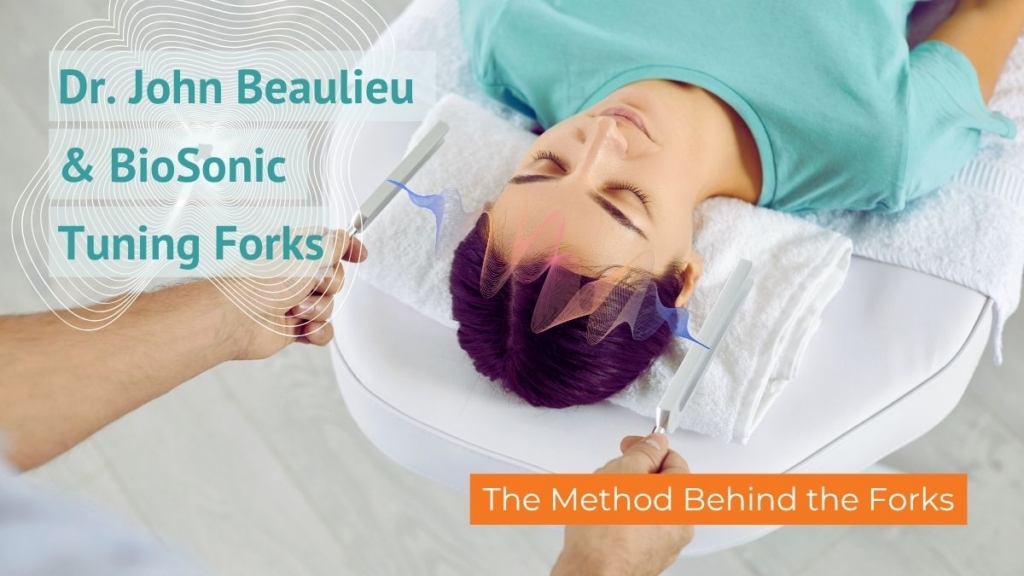
If you’ve ever shopped for healing tuning forks, you’ve run into BioSonic tuning forks. They’re the C and G pair in so many practitioners’ bags, the weighted Otto 128 on so many massage tables, and the brand behind dozens of “starter sets.” What a product page can’t tell you is where these forks came from, or why the man who designed them cares less about any single frequency than about how you listen.
That man is Dr. John Beaulieu, ND, PhD. His story starts in a silent room at New York University, and it explains a lot about how BioSonic tuning forks are meant to be used.
Quick answer: BioSonic tuning forks are a line of aluminum-alloy healing tuning forks developed by Dr. John Beaulieu, a naturopathic physician, psychologist, and composer, and sold through BioSonic Enterprises in New York. They’re tuned to musical intervals (most famously the C256 and G384 “perfect fifth” pair) and include weighted Otto forks made to be placed on the body. Beaulieu’s method focuses on intervals, listening, and somatic awareness rather than matching a frequency to a symptom.
Who Is Dr. John Beaulieu?
 Dr. John Beaulieu is a composer, pianist, psychologist, and board-certified naturopathic physician who has worked with sound and healing for close to five decades. According to his BioSonics booklet biography, he completed advanced degrees at Purdue University and Indiana University, studying music and therapeutic systems design. He went on to serve as Supervisor of Activity Therapy at Bellevue Psychiatric Hospital in New York City and as an assistant professor at the City University of New York.
He is also a Polarity Therapy practitioner. Polarity, founded by Dr. Randolph Stone, shapes much of his thinking about the body’s geometry and the “Five Elements,” which still show up in his tuning fork protocols today.
 His books include:
- Music and Sound in the Healing Arts (Station Hill Press), one of the first books to explore sound and music in healing from historical, educational, and therapeutic angles
- Polarity Therapy Workbook, which organizes Polarity into sixteen learning protocols
- Human Tuning: Sound Healing with Tuning Forks, his practical guide to the forks and protocols
Today, Beaulieu and his wife, Thea Keats Beaulieu, direct BioSonic Enterprises in New York’s Hudson Valley. Thea is the company’s president, a dance and movement therapist, and a registered Polarity practitioner. You’ll also find Dr. Beaulieu in our Sound Healing / Sound Therapy directory, in our Podcast directory, in our Online Shopping directory (for sound healing tools and forks), and in our Online Course directory.
The Anechoic Chamber: Where BioSonic Tuning Forks Began
The BioSonics origin story isn’t marketing invention. It’s a listening experiment.
The composer John Cage once described sitting in an anechoic chamber, a room built to absorb all outside sound, and hearing two tones: a high one he was told was his nervous system and a low one that was his circulating blood. Inspired by that account, Beaulieu sat in an anechoic chamber at New York University for 500 hours over two years, simply listening to his own body, as he recounts in the BioSonics booklet.
He noticed the high-pitched “nervous system” sound shifted with his state of consciousness and was made of several tones at different intervals. Then he brought two tuning forks into the chamber and tapped them together. In his words, as quoted by The College of Sound Healing:
“Immediately I observed that the sound of my nervous system realigned to the sound of the tuning forks. It was then that I realised that people can be tuned like musical instruments!”
That one idea, that a person can be “tuned” the way a piano is tuned, became the foundation of everything BioSonics makes. Beaulieu dates his first work with tuning forks to the early 1970s.
What Makes BioSonic Tuning Forks Different
They’re designed to ring overtones
Most people assume the “best” tuning fork produces the purest possible sine wave. Beaulieu disagrees. He sold German steel forks in the 1970s and early ’80s and eventually abandoned them. As he explained to The College of Sound Healing:
“Steel tuning forks do not ring the overtones. Also steel forks are difficult to use and limited because you can not tap them together to get an overtone concert of sound.”
So he spent years developing an aluminum alloy that would ring the full harmonic series. The BioSonics FAQ describes the alloy as one with “a hardness that will ring the harmonic series without dropping harmonics.” All BioSonics forks are made in the USA.
Intervals matter more than exact frequencies
This is the part most fork buyers miss. On the BioSonics FAQ, the company writes that small frequency variations outside the lab are normal and even desirable, because “it is really the intervals that are most important.”
In other words, Beaulieu’s system isn’t really about finding “the 528 Hz fork for your heart.” It’s about the relationship between two or more tones, and what that relationship does inside the listener. (If you want the background on individual frequencies like 432 Hz and 528 Hz, see our guide to sound healing frequencies.)
They’re tuned with mathematical intention
BioSonic forks use “just” tuning, based on whole-number ratios, rather than the equal temperament of a modern piano, according to The College of Sound Healing. The Otto line is built on an 8 cycles-per-second fundamental raised in octaves (8, 16, 32, 64, 128), which BioSonics describes as “the generating tone for all our tuning forks” on its Otto 128 product page.
The Main BioSonics Tuning Forks, Explained
Here’s a plain-language map of the BioSonics line, drawn from the company’s frequency guide, FAQ, and product pages.
| Fork or set | Frequency | Type | How it’s used |
|---|---|---|---|
| Body Tuners (C & G) | 256 Hz and 384 Hz | Unweighted pair | The signature “perfect fifth.” Tapped and held near the ears for listening. BioSonics’ recommended starting point. |
| Otto 128 | 128 Hz | Weighted | Stem placed on bones, joints, and points (sternum, rib heads, sacrum, hips, knees, feet). The most popular Otto. |
| Otto 64 | 64 Hz | Weighted | Lower back, sacrum, and coccyx work. |
| Otto 32 | 32 Hz | Weighted | Gentle tactile work with skin and hair. |
| OM Tuner | 136.1 Hz | Weighted | Meditation and heart-centered reflection. |
| Low G | 192 Hz | Weighted | Pairs with the Otto 128 to create a fifth you can feel on the body. |
| Solar Harmonic Spectrum | Full C-to-C octave (8 forks) | Unweighted | Creates every interval in the scale: unison, seconds, thirds, fourths, fifths, and more. |
| Angel Tuners | 4096, 4160, 4225 Hz | Unweighted (set of 3) | High-tone contemplative listening. |
| Planetary, Fibonacci/Leonardo, Solfeggio, Modal sets | Varies | Unweighted | Specialty and advanced sets for interval and modal work. |
Otto Tuning Forks: What Does “Otto” Mean?
Otto tuning forks are the weighted side of the BioSonics line. “Otto” is short for osteophonic, from “osteo” (bone) and “phonic” (sound), as the BioSonics FAQ notes. Otto forks have weights on the prongs, which slows the vibration and sends it down the stem into bone and tissue. You feel an Otto as much as you hear it. That’s why it’s the go-to fork for bodyworkers, massage therapists, and acupressure practitioners.
The Perfect Fifth: The Heart of the BioSonics Method
If one idea sums up Beaulieu’s approach, it’s the perfect fifth: two tones in a 3:2 ratio, like C256 and G384.
In his paper “The Perfect Fifth: The Science and Alchemy of Sound”, published in The Rose+Croix Journal, Beaulieu traces the interval through history. Pythagoras called it diapente, “through five tones.” Lao Tzu described it as the sound of universal harmony between yin and yang. In yogic tradition it represents the dance of Shiva and Shakti. Beaulieu calls the C and G Body Tuners the most widely used BioSonic forks among practitioners.
The 3:2 ratio also echoes in Polarity Therapy. Dr. Randolph Stone mapped the body onto a five-pointed star he called “Nature’s Geometric Keyboard,” and Beaulieu notes that the ratio between certain body proportions is the same 3:2 as a musical fifth, per the BioSonics booklet.
What does using the fifth actually look like? In one case history from that paper, Beaulieu showed a client the C and G forks, asked her to close her eyes and “be with the sound,” tapped the forks with intention, and brought them to her ears. Simple. The skill is in everything around the tap.
Beyond the Forks: Somatic Communication
This is where Beaulieu’s work separates from a “frequency chart” approach to tuning fork healing. The forks are instruments. The method is a way of paying attention.
His Shift Network course description calls it somatic communication: using sound and touch to communicate with the felt vibrations moving through the body’s connective tissue. It draws on psychologist Eugene Gendlin’s 1960s research, which found that therapy clients who attuned to bodily sensations alongside their thoughts and emotions were more likely to experience lasting change.
The key techniques Beaulieu teaches include:
 Sensory Kinesiology™. Identifying areas of strength and vulnerability through somatic feedback, then letting that feedback guide your choice of sound, whether forks, voice, bowls, or gongs.
- Wave Palpation. Tuning in to and locating specific points on the body through vibrational “interference patterns.”
- Five Element Harmonic Tapping. Combining sound and touch, rooted in Five Element theory, to speak directly to areas of dissonance.
- Somatic knots. Beaulieu’s term for mental or emotional patterns tied to past experiences that become held tension. His protocols aim to help “untie” them.
- Voice Energetics. Listening to the sound dynamics of how someone speaks, not just what they say, and using your own voice as a healing instrument.
- Mindful Listening. Becoming one with a sound, which Beaulieu describes as complementary to mindfulness meditation in his Perfect Fifth paper.
His broader body of work is known as BioSonic Repatterning™. Beaulieu applies these principles to every instrument, which is why his classes attract singing bowl players, gong practitioners, and voice workers, not only tuning fork owners.
On the BioSonics site, his own one-line summary of the practice is worth keeping in mind:
“Use sound as an invitation to pay attention: listen, notice, learn, and let the practice become your own.”
The Nitric Oxide Research: What It Says and What It Doesn’t
You’ll see “tuning forks release nitric oxide” repeated across fork shops and wellness blogs. Here’s where the claim comes from and how much weight it can carry.
In Beaulieu’s own account, published on the Neuroarts Resource Center, he and neuroscientist Dr. George Stefano reported in 2002 that specific vibrations transferred to cells with tuning forks caused nitric oxide to spike. Nitric oxide is a signaling molecule involved in blood vessel relaxation, immune activity, and the stress response.
The peer-reviewed paper most often cited is a 2003 review in Medical Science Monitor, “Sound therapy induced relaxation: down regulating stress processes and pathologies,” by Salamon, Kim, Beaulieu, and Stefano. It proposes nitric oxide as the molecule chiefly responsible for the relaxing effects of music and sound therapy, and outlines a possible neurochemical pathway.
Here’s the honest context. That paper is a review and hypothesis, not a clinical trial. The cellular findings haven’t been confirmed in large, controlled human studies. An independent overview at ScienceInsights notes that whether the effect “translates reliably to whole-body application” is still uncertain. It also notes that people do report relaxation and reduced muscle tension after sessions, but it’s not yet clear how much comes from the frequency, the vibration, or the quiet, attentive space of the session itself.
That’s a fair place to land. Beaulieu’s research gave sound healing a plausible biological hypothesis. It’s a starting point for curiosity, not a medical promise. For a wider look at the evidence, see our post on the efficacy and benefits of sound healing therapies.
BioSonics vs. Biofield Tuning: How the Two Approaches Differ
Many people searching for tuning forks for healing find two big names: Dr. John Beaulieu’s BioSonics and Eileen Day McKusick’s Biofield Tuning. Both are respected, and both use tuning forks, but they start from different places.
| BioSonics (Dr. John Beaulieu) | Biofield Tuning (Eileen McKusick) | |
|---|---|---|
| Core idea | People can be tuned like instruments; intervals and listening rebalance the nervous system | Tuning forks detect and correct distortions in the biofield, the energy field around the body |
| Where the forks go | At the ears (interval listening) and on the body (weighted Otto forks on bone and points) | Mostly in the field around the body, plus weighted forks on the body |
| Signature tools | C256 and G384 Body Tuners (perfect fifth), Otto 128 | Unweighted forks for field work; weighted forks based on the 7.83 Hz Schumann Resonance, per Biofield Tuning |
| Skill emphasis | Somatic communication, Sensory Kinesiology™, voice, Polarity and Five Elements | Reading the field through changes in the fork’s tone and mapping where tension is held |
| Best fit for | Bodyworkers, therapists, musicians, and anyone who wants a method that transfers to bowls, gongs, and voice | People drawn to energy-field work and a structured, field-mapping practice |
Neither is “right.” Many practitioners study both. If the biofield approach calls to you, explore Eileen McKusick’s Biofield Tuning training course.

Learn the Method From the Person Who Designed the Forks
Owning BioSonic tuning forks and knowing how to use them are two different things. Most fork sets ship with a short card, and even Beaulieu’s book Human Tuning can only take you so far on the page. Beaulieu’s actual method, the listening, the somatic assessment, the protocols, has historically been taught in person, in small classes at his home studio in upstate New York and in workshops across Europe.
The Biosonic Tuning Fork Frequencies course through The Shift Network brings that method online. Here’s what’s inside:
- 7 self-paced modules (about 90 minutes each) as streaming video and MP3 audio with transcripts
- Hands-on training in Sensory Kinesiology™, Wave Palpation, and Five Element Harmonic Tapping
- Step-by-step protocols for working with Otto and Solar Harmonic forks
- Two Sound Healing Clinic modules where you watch Beaulieu work with real students
- Bonuses: Mind, Sound & Consciousness (PDF), The Design Nature of Sound (PDF excerpt), and a Voice Energetics video
- $347 one-time, or two payments of $183, with a 14-day refund window
One honest note: this is a skill-building course, not a tuning fork certification. If you need a credential, read everything you need to know about sound healing training first. If you want to learn the BioSonic method from its originator, this is the most direct path.
Enroll in Biosonic Tuning Fork Frequencies →
New to tuning forks entirely? Start with our beginner’s guide: How to Use Tuning Forks for Healing. Want to compare options first? Browse all sound healing training courses in our directory.
Frequently Asked Questions
Who invented BioSonic tuning forks?
Dr. John Beaulieu, ND, PhD, developed BioSonic tuning forks after hundreds of hours of listening research in an anechoic chamber at New York University. He and Thea Keats Beaulieu direct BioSonic Enterprises, which makes the forks in the USA.
What is the Otto 128 tuning fork used for?
The Otto 128 is a weighted, 128 Hz BioSonic fork designed to be placed on the body. Practitioners rest the stem on bony areas such as the sternum, rib heads, sacrum, hips, knees, and feet so the vibration can be felt through bone and tissue. BioSonics frames it as a tool for relaxation and body awareness, not a medical treatment.
Which BioSonic tuning fork should a beginner start with?
BioSonics recommends starting with the C and G Body Tuners (256 Hz and 384 Hz), which together create the perfect fifth. Many people add the weighted Otto 128 for on-body work.
Are BioSonic tuning forks better than cheaper forks?
BioSonic forks are made in the USA from an aluminum alloy designed to ring a full set of overtones, which Beaulieu considers essential for therapeutic use. Many inexpensive cast forks don’t sustain or ring overtones the same way. That said, how well you listen matters more than the brand of fork.
What is the Human Tuning book?
Human Tuning: Sound Healing with Tuning Forks is Dr. John Beaulieu’s practical guide to the BioSonics system. It explains his idea that the nervous system can be tuned like an instrument and includes exercises and tuning fork protocols, including his Five Element protocols.
Is BioSonics the same as Biofield Tuning?
No. BioSonics is Dr. John Beaulieu’s system, focused on musical intervals, listening, and somatic communication. Biofield Tuning is Eileen McKusick’s method of working with tuning forks in the energy field around the body.
Is the Biosonic Tuning Fork Frequencies course a certification?
No. It’s a self-paced, 7-module skill-building course from The Shift Network. It doesn’t grant a practitioner credential.
Tuning fork sound healing is a complementary wellness practice. It does not diagnose, treat, or cure any medical condition and is not a substitute for medical or mental health care. This post contains affiliate links; if you enroll through them, The Mind Body Spirit Network may earn a commission at no extra cost to you.